Case Studies
Our platform had grown significantly, but the website still looked like a startup tool. We needed something that reflected where Coinsbuy actually was as a product.
Chief Product Officer
COINSBUY
Overview
Before the redesign launched, Coinsbuy's website was already moving in the wrong direction. From December 2024 to March 2025, organic CTR dropped from roughly 20% to under 3% — even as daily impressions nearly quadrupled. The site was gaining visibility but rapidly losing the ability to convert it into clicks. Average position was weakening in parallel. The website wasn't failing — it was quietly falling behind.
WSA.design was brought in to fix that. After the redesigned site had time to index and settle, organic clicks grew by 28.5%, CTR recovered from under 3% to nearly 8%, and search positions returned to their December 2024 baseline — reversing months of decline.
The Problem
The old site had a structural honesty problem. The product had grown into a multi-chain infrastructure platform — supporting token collection, on-chain and off-chain transactions, gas optimisation, TRX staking, flexible settlement options, and dedicated environments for both merchants and enterprise clients. None of this was visible on the website.
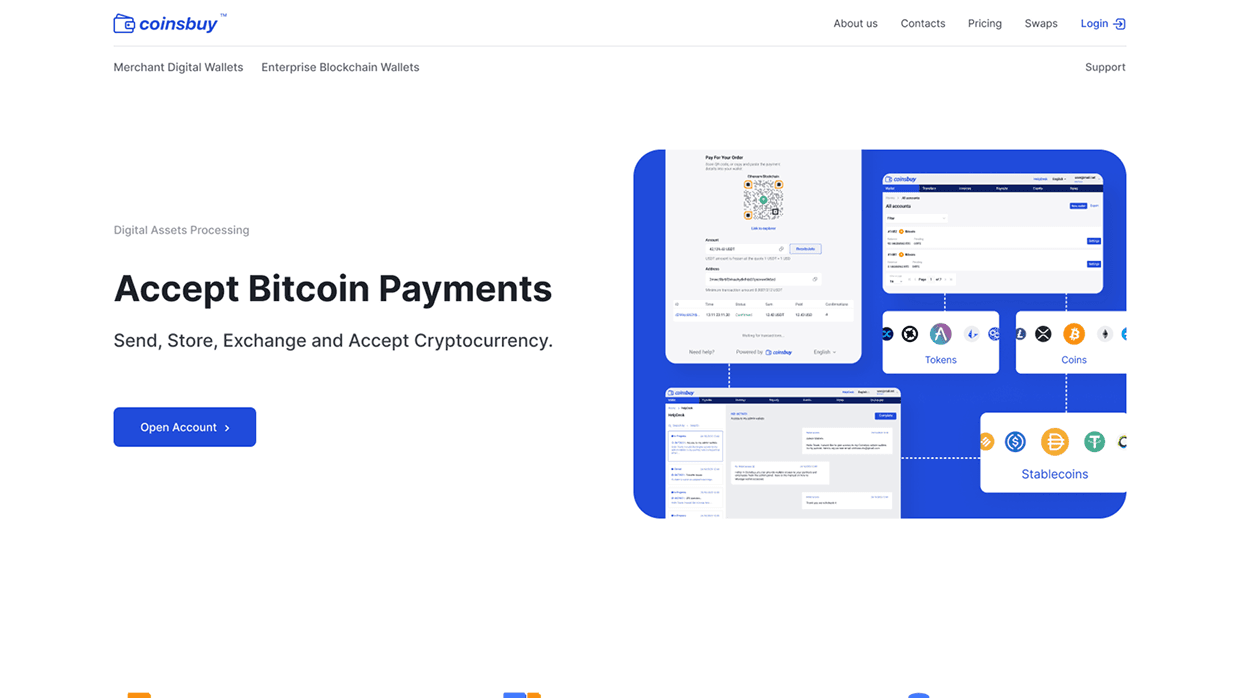
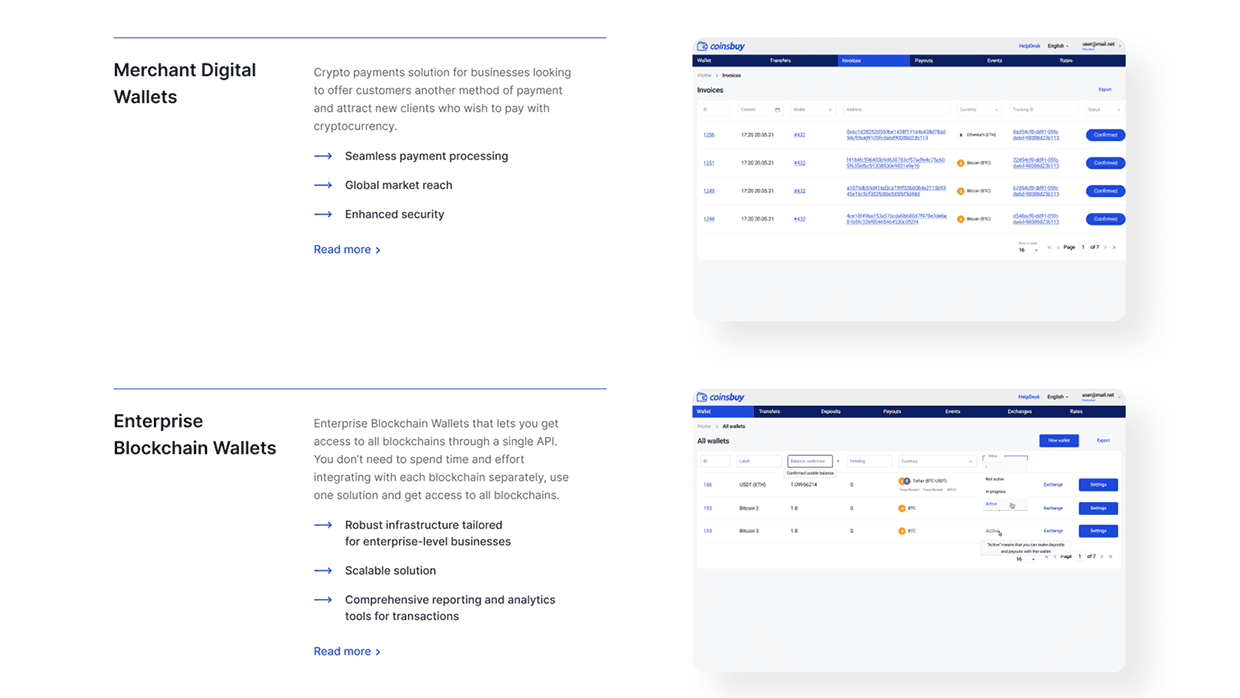
Visitors landed on a page that led with "Accept Bitcoin Payments" and offered two navigation items. There was no fee transparency, no developer-facing content, no competitive context, no proof of scale. The product pages themselves were thin: a few paragraphs and a screenshot, nothing that communicated the depth of what the platform actually did.
For a B2B fintech product selling to exchanges, brokers, and enterprise clients, this gap was costly. Sophisticated buyers evaluate infrastructure before they evaluate pricing. If they can't understand the product's capabilities from the website, they move on. The old site consistently failed that test.
What Changed
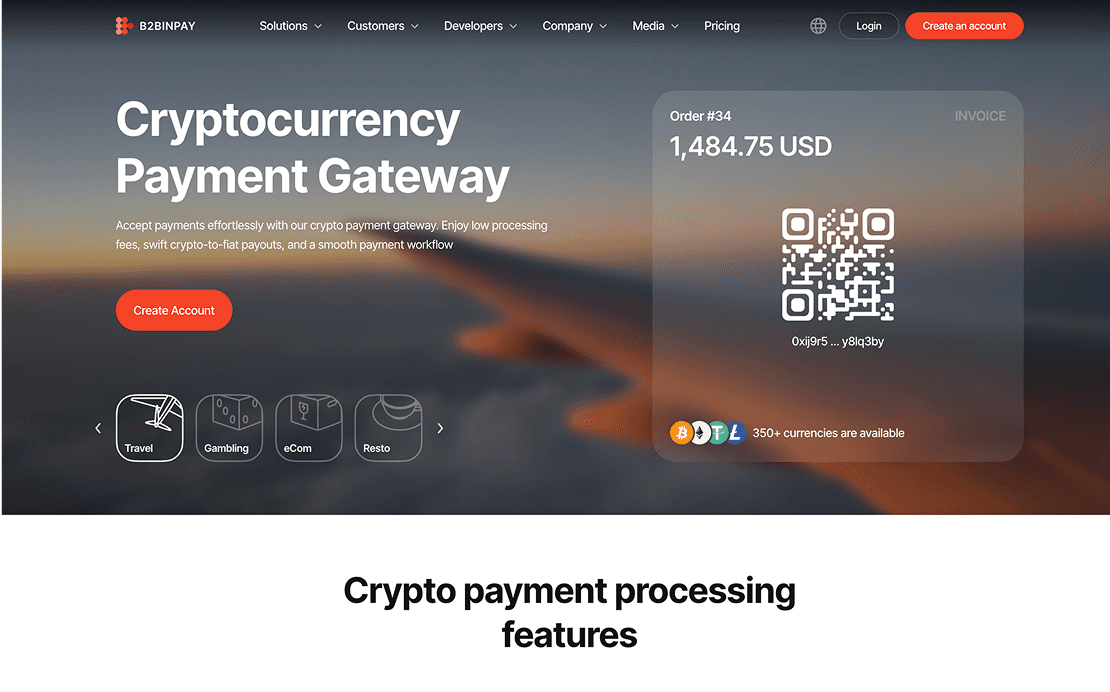
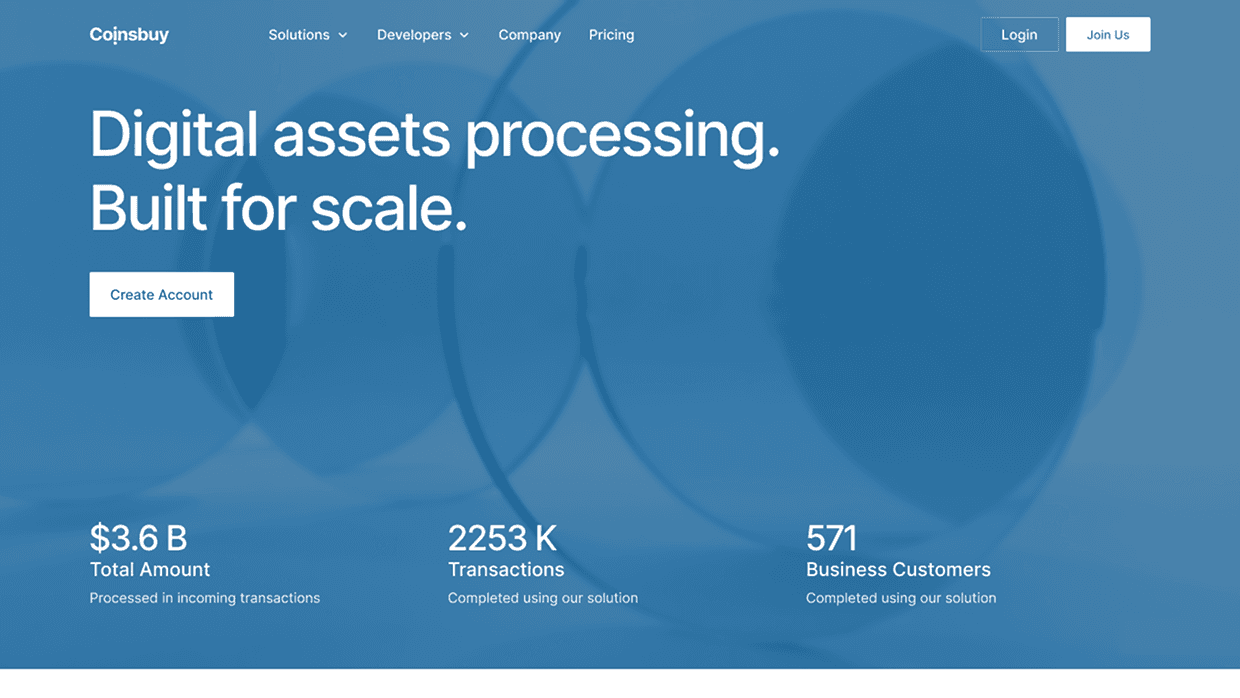
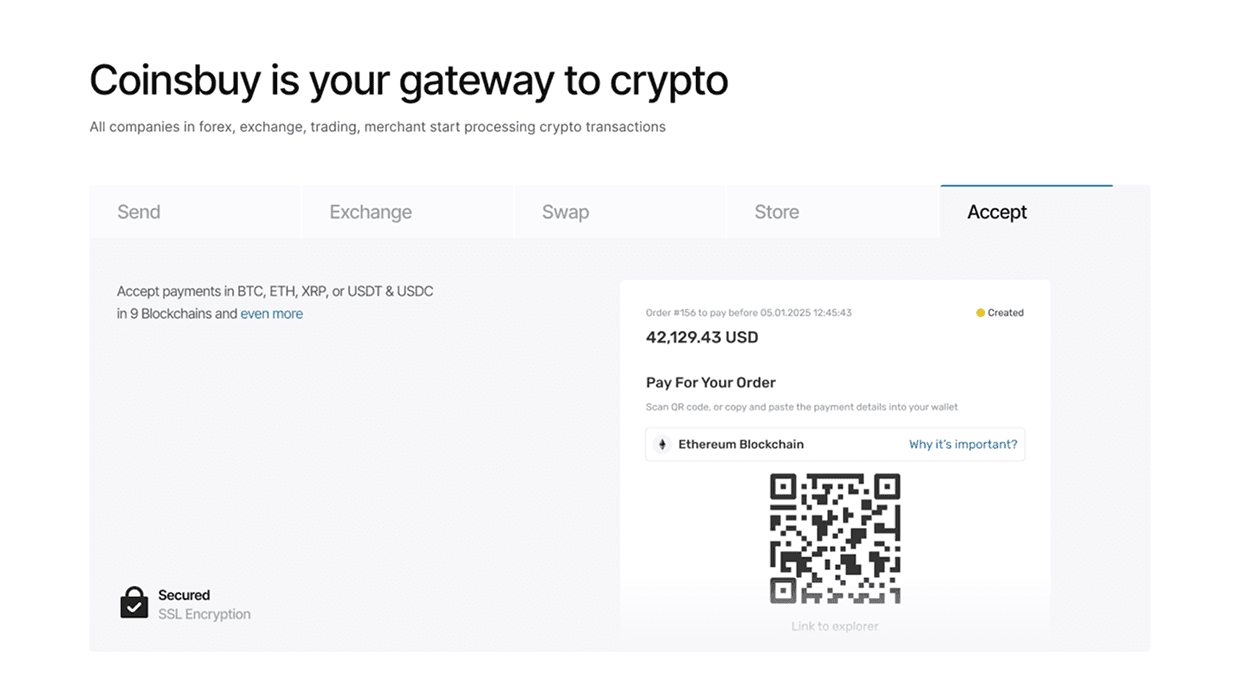
Repositioning the product category. The headline shift from "Accept Bitcoin Payments" to "Digital assets processing. Built for scale." wasn't cosmetic — it changed which buyer the site spoke to. One signals a payment plugin. The other signals infrastructure.
Proof of scale in the first screen. $3.6B processed, 2.2M+ transactions, 571 business clients were moved above the fold. A B2B buyer's first question is always "can I trust this company with my volume?" — the new site answers it before it's asked.
Navigation rebuilt around decisions, not products. The old structure put product names at the top level, forcing users to already know what they wanted. The new four-item navigation — Solutions, Developers, Company, Pricing — organises around what buyers are trying to find out.
Product pages rebuilt from the ground up. The old Merchant Digital Wallets and Enterprise Blockchain Wallets pages were thin overviews. The new Crypto Payment Processing and Wallet as a Service pages are comprehensive: Liquidity and automatic conversion, Settlements by coin type and stablecoin, Deposit limits, Payment currency selection, Off-chain transaction flows, Token collection, Gas fee savings, TRX staking, Flexible confirmations — every major capability now has its own section with supporting UI.
Fee transparency. The Know Your Fees section shows exact rate tiers for both products side by side. This is table-stakes for enterprise sales and was entirely missing from the old site.
Developer and integration coverage. A dedicated developer section — API documentation, integration patterns, financial operations — addressed a buying audience the old site ignored completely.
Competitive context. The Challenges section directly compares Coinsbuy against standard crypto wallet platforms across consolidation, security, and real-time data. This kind of comparison is what enterprise buyers use to build internal business cases.
Business type segmentation. Clear industry tags — E-commerce, Forex and CFD Brokers, Gambling, Merchants, Car Dealerships, Crypto Brokers, Exchanges — let each type of visitor immediately recognise that the product is built for their context.
These weren't cosmetic changes. Each one addressed a specific reason users might bounce, hesitate, or misread the offer.
Results
The comparison runs from the pre-launch period (Apr–Jun 2025) to settled post-launch performance (Oct–Dec 2025) — approximately 4–6 months after the new site fully indexed.
+28.5%
Organic Clicks Growth
Pre-launch quarter (Apr–Jun 2025) vs post-launch settled (Oct–Dec 2025)
~3% → ~15%
CTR Recovered
Pre-launch quarter avg vs Jan–Feb 2026 settled performance
pos. 68 → pos. 13
Google Position
From worst point (Feb 2025) to best reached (Jan 29, 2026)
The CTR recovery reflects two things: the redesign's impact on page structure, title relevance, and search intent alignment — and a growing share of branded queries as awareness built. Average CTR climbed from ~3% (pre-launch quarter) to ~10% in the settled post-launch period (Oct–Dec 2025), with peaks above 20% in January 2026.
The position improvement is the most structural signal. At the worst point the site sat at average position 68. By Oct–Dec 2025 the settled average had improved to ~30 — and continued improving into 2026, reaching a best of 12.9 on Jan 29, 2026. Google began treating the redesigned site as more relevant and more authoritative.
💡 Why results took ~8 weeks to appear: The redesign launched June 25, 2025. July and August showed no significant change — this is expected SEO behaviour. Google needs 6–10 weeks to re-crawl, re-index, and re-evaluate a substantially changed site before new relevance signals appear in rankings. The break came in early September: positions and CTR improved sharply and kept improving through Q4 2025 and into 2026. A delayed-but-sustained improvement like this is a stronger signal than an immediate spike — it reflects a genuine structural re-evaluation by Google, not a temporary fluctuation.
Conclusion
Our platform had grown significantly, but the website still looked like a startup tool. We needed something that reflected where Coinsbuy actually was as a product.

John Doe | CEO
COINSBUY
The Coinsbuy redesign worked because it treated the website as a sales problem, not a design problem.
The old site undersold a product that had outgrown it. The platform had evolved into a serious multi-chain infrastructure layer — with on-chain and off-chain transaction handling, gas optimisation, staking, consolidated wallet management, and enterprise-grade settlement options — but none of that was visible to a buyer landing on the homepage.
The redesign didn't just update the look. It rebuilt the information architecture from the ground up: new product pages that actually document the platform's capabilities, fee transparency that removes a common sales friction point, developer coverage that addresses a previously ignored audience, and a competitive frame that gives buyers the context they need to make a decision.
The search results confirmed what the structural changes suggested: a site that better represents its product earns more clicks, ranks higher, and converts the traffic it already had.
Get Your Professional Website Today
Whether you’re launching something new or improving an existing platform, we’re ready to discuss your goals and explore the best way forward.